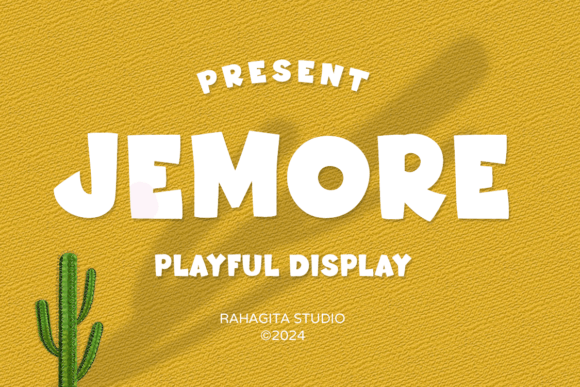
Jemore: A Playful Display Font for Web Design
Testing Jemore on a boutique online store’s hero section felt like hitting the right note in a design symphony. As a web designer, I always look for fonts that balance personality with practicality, and Jemore checks both boxes with its playful bold display style.
Jemore for Kids’ Branding and Youthful Web Projects
When I first saw Jemore, I immediately thought of a children’s educational website or a toy brand landing page. Its retro vibe combined with a youthful spirit made it feel like the perfect fit for kids’ projects. I used it as the main heading for a product showcase banner, and the result was instantly engaging—playful without being childish, bold without overwhelming the layout.
I paired Jemore with a clean sans serif font for body copy, which helped maintain visual clarity while keeping the brand identity fresh. It worked especially well over a colorful background image, where the high contrast between the font and the visuals made the text stand out without extra effort.
Jemore in Packaging Design and Product Landing Pages
The product description mentions Jemore is great for packaging design, and after testing it on a product landing page, I can see why. I used it for the headline of a new line of handmade soap products, and the retro charm of the font complemented the artisanal feel of the brand.
On mobile, the boldness of Jemore didn’t get lost—it scaled well and remained legible even at smaller sizes. The font’s weight and character shapes gave the product a sense of quality and approachability, which helped increase the perceived value of the items on display.
For buttons and call-to-action sections, I opted for a simpler sans serif to keep the user experience smooth, but Jemore still played a key role in setting the tone of the page.
Jemore for Creative Portfolios and Digital Brand Kits
In a creative portfolio project, I wanted a font that would reflect my client’s personality—a young designer who loves vintage aesthetics and modern minimalism. Jemore became the go-to choice for headers and section titles. It brought a unique energy to the site that stood out from other portfolios using more standard typefaces.
Using Jemore in the navigation bar added a touch of nostalgia, while keeping the rest of the layout professional. It wasn’t too flashy, but it had just enough character to make the brand feel memorable. For a digital brand kit, this kind of distinctiveness is invaluable.
One thing I noticed when working with Jemore was how it handled spacing. The letterforms had generous tracking, which made long headlines feel breathable and easy to read. This was especially useful for blog headers and feature section titles where readability matters.
Jemore in Campaign Landing Pages and Branded Content
For a limited-time marketing campaign, I needed a font that could capture attention quickly. Jemore was ideal for the headline of the landing page, where it delivered a strong visual punch. The retro flair of the font helped set the campaign apart from competitors, making it feel both nostalgic and fresh.
I also tested Jemore in a promotional graphic for social media. It worked surprisingly well in a small format, maintaining its boldness without becoming too dense. The font’s versatility allowed it to be used across multiple platforms, from email headers to Instagram posts.
When it came to dark backgrounds, Jemore performed exceptionally. The contrast between the light-colored text and the dark backdrop made the font pop, which was crucial for ensuring visibility on different devices and screen types.
Jemore and Responsive Typography Challenges
As with any display font, Jemore requires careful consideration when implementing it in responsive designs. I found that limiting its use to large headings and decorative elements kept the layout balanced. On smaller screens, I avoided using it in long paragraphs or body text, which could reduce readability.
Font pairing was another key factor. I experimented with several combinations, but the best results came from pairing Jemore with a neutral sans serif for body content. This kept the design focused and prevented visual clutter.
Checking the font’s file formats and webfont availability was an important step before integrating it into the project. Ensuring that Jemore had proper licensing and support for multilingual characters was essential for a global audience.
Jemore for Cohesive Brand Identity and Visual Hierarchy
What stood out most about Jemore was its ability to influence the overall mood of a website. Whether it was a kids’ brand, a creative portfolio, or a campaign landing page, the font helped create a consistent visual language that resonated with the target audience.
Its boldness helped establish a clear hierarchy, guiding users through the content in a natural way. I noticed that visitors spent more time scanning the pages when Jemore was used in the right places, which speaks to its effectiveness in improving engagement.
Overall, Jemore proved to be a versatile and impactful display font that brings a unique personality to digital projects. From its retro charm to its modern adaptability, it’s a font that deserves a place in any designer’s toolkit.